YELLOW EYESNew York, USA
“The Rock and Roll Loop”
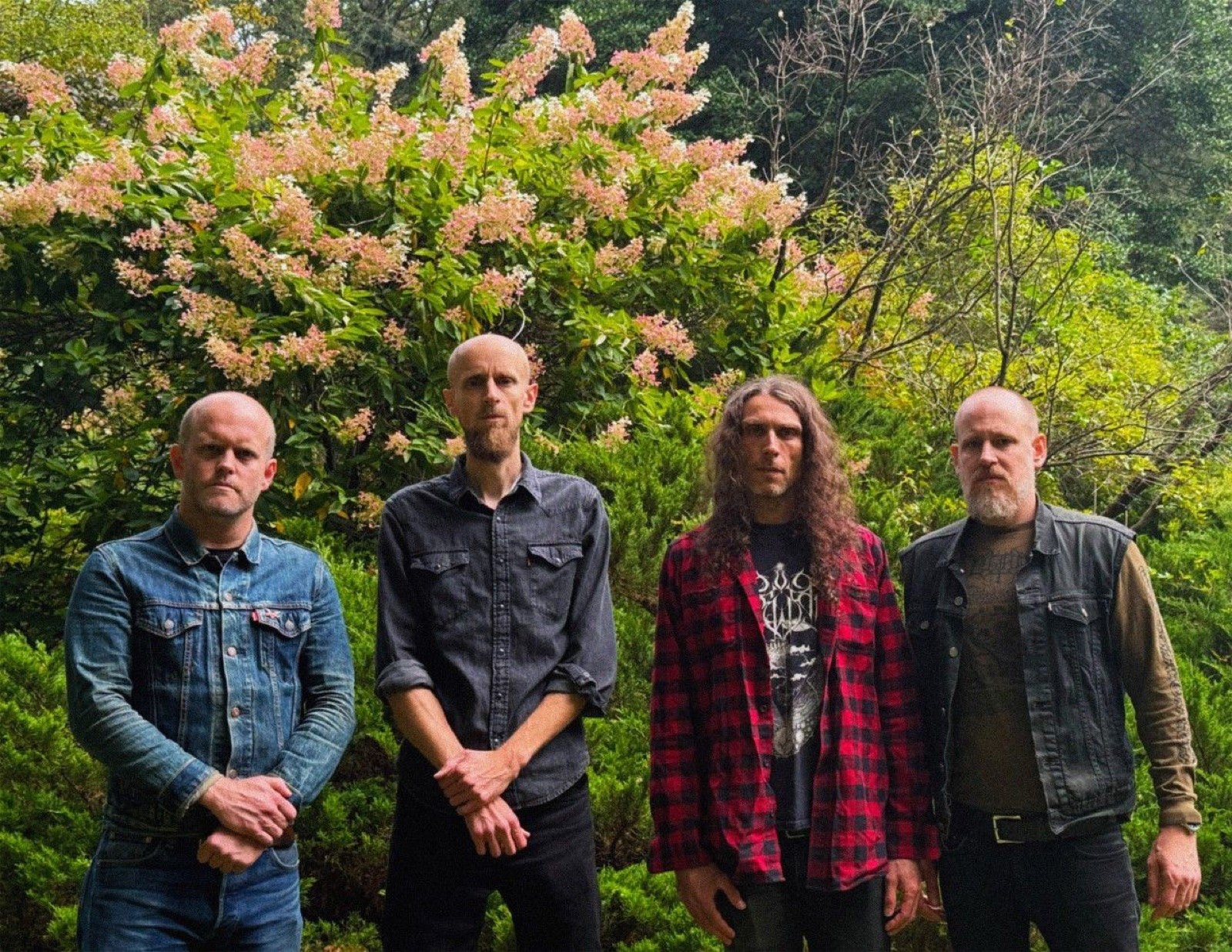
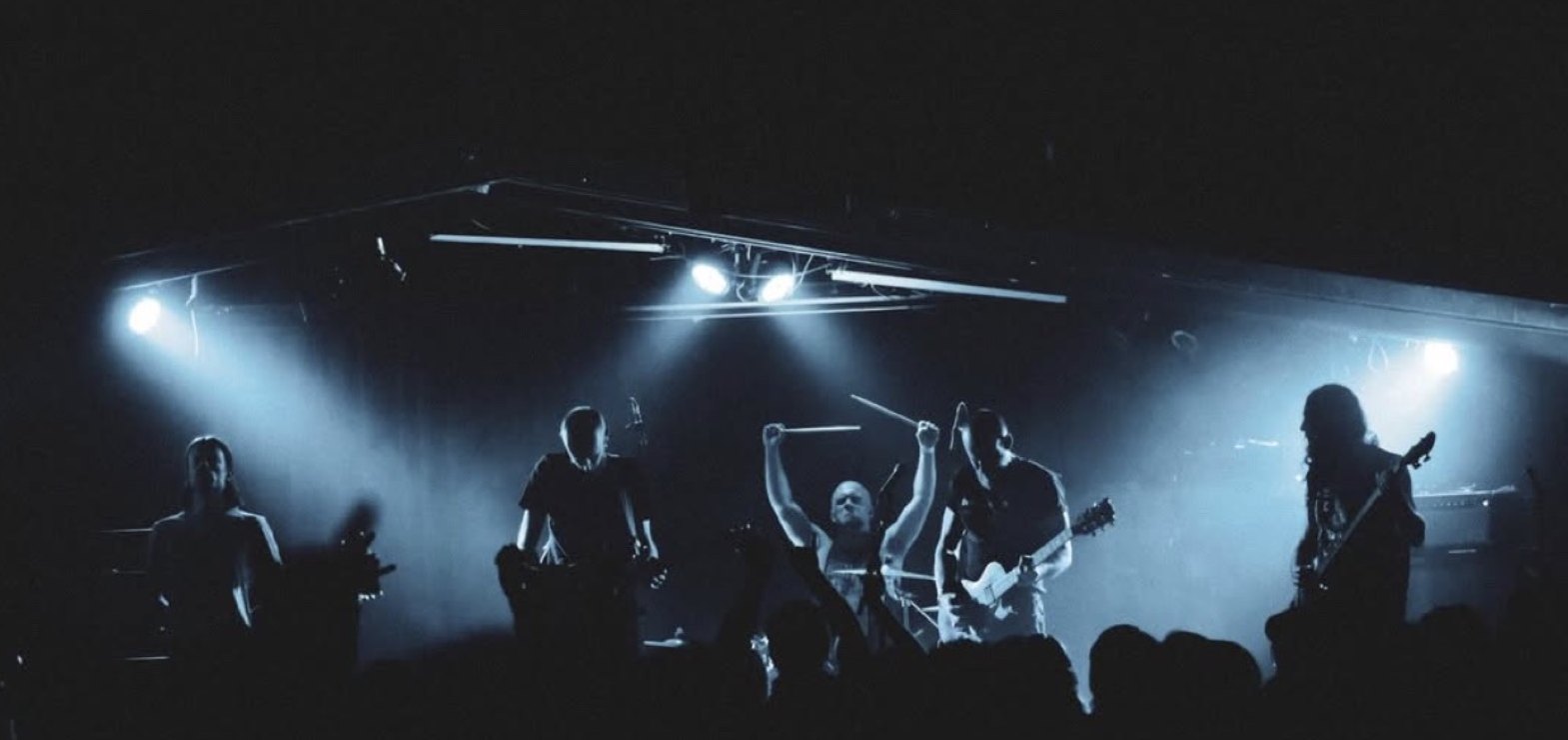
If you’ve been to a gig, on stage or in the crowd, you know time and space get weird there. Yellow Eyes, a black metal outfit from New York (though that’s only part of the story), are very good at making it happen. Magic contradicts itself, and so does their show. Four people of flesh and bone get on stage and try to say what can’t be said, and at some point a gate opens.
We met them at their first ever show in Belgrade. We talked about the grind of making art, life on tour, how their records have changed over the years, and Russia, which matters more to the two brothers’ work than you’d expect.
Turn on the live performance from that night and immerse yourself in our conversation.
The Russian bells are so beautiful to me.
Q Do you speak Russian?
Will: I don’t speak Russian. My wife is from Russia — I didn’t live there, but I spent lots of time there. Every time we go out and see her parents now, we meet them elsewhere, not in Russia. And I’ll study Russian for like a month before we go.
Q How did you come up with a Russian name for your project Ustalost, which means “tiredness” in Russian?
Will: I think I was just looking for names. I’m married to a Russian, so I have a Russian translator in my house all the time. I think it was like an outlet for different ideas that weren’t working. I think every time I would start working on that project, I was maybe sick and tired of everything else. It did represent a channel for my fatigue with the rest of my other projects, or my life, or something. Who knows how it hits the ears of a native Russian speaker, but at the time it seemed like the right word. And my wife, she’s not in the metal scene, she said, “Yeah, that works.” Okay, well, I’m trusting you.
Q I know there are a bunch of places in your catalogue where you sampled traditional Russian music. On the first track of Immersion Trench Reverie, there’s “Oy, to ne vecher.” Do you find anything particularly unique in Russian traditional music? How do you perceive this musical phenomenon in general?
Sam: We’ve always been inspired by not just Russian, but any sort of close harmony, you know, Estonian choirs, Bulgarian music.
Will: It’s just the most beautiful. It’s the power in the singing.
Sam: Right, Ukrainian singing is beautiful, the choral harmonies. And the bells — the Russian bells are so beautiful to me, and I heard them for the first time in Russia.
Will: We gathered all of those field recordings in Russia, so there’s some personal connection to being there.
Q Do you listen to music on tour?
Will: We do — not usually metal, though. It’s a mix of a lot of things. This time we have a driver, so we’ve listened to a lot of his playlists, which run the whole gamut. We’re all very open-minded music listeners. Sometimes when we’re on tour with other metal bands we listen to more metal. On this tour, not much metal, kind of more peaceful, cut the energy out.
We often listen to Kino on tours. It’s one of our mutual favorite bands of all time. Grazhdanskaya Oborona, another one of our top favorites. I would have to ask Alex, our bass player, he was the one who was DJing, but it was some music from Africa, world music, lots of stuff like that. There’s no rules to it.
Will: Last night after the show, I think maybe Steely Dan popped up on the playlist. The issue is it always depends on what kind of van you have. This van only has two speakers in the front, where the driver and the passenger are. So if we want to hear it very well in the back, they have to turn it up too loud for them in the front. So because of that, the music is a passive part of our trip this time.
Drink the rakija and find some energy.
Q Do you have your own habits for spending time on tour?
Will: Today we had to cross the Serbian border, and last night we stayed up too late, drinking alcohol and having fun. So when it’s a night like that and then a long drive, usually you just want peace and quiet. So sometimes I even put my AirPods in my ears and put on the noise-cancelling, and I don’t even listen to anything, just silence.
Sam: For a living, I write music for TV commercials, and the timing of this tour worked out really bad, where I’m working on a commercial and I’m working from the van. It’s not the first time I’ve done it, but it’s really hard to get work done.
Q You’ve said that Confusion Gate is kind of about coming of age and your own struggles with it, but you’re still young enough to stay up late.
Sam: Surprisingly.
Will: Definitely as you get older, you go home, you have to live a healthier life. So then you have to almost get yourself in shape to go on tour by drinking more. I mean, it’s funny, you get into a loop where it’s like, today I’m tired; in a perfect world I would go to bed early and everything, but the only way to get through the show is to drink the rakija that we were given and find some energy and some power. You get in the rock and roll loop. For better or for worse — mostly for worse.
Q I got the impression that Yellow Eyes was also partly created in order to tour.
Will: We were living in Prague together, the two of us, and we were going to shows and seeing bands coming through. We were musicians at the time, but hadn’t put all of our energy and focus into doing anything like this.
Will: I think it was just when we saw that other bands were doing this, we realized that was a possibility if we really went home and tried. We were wondering, can we do it? Let’s try. Let’s try to make music, let’s try to tour. Here we are.
Q Can you imagine Yellow Eyes as a studio-only project?
Will: I can. I think playing gigs unlocked adventures for us for 15 years, but at some point — I can see doing less touring. Right now our tours are shorter, we all have other jobs and we have to get back to our lives. Sometimes we’ll come to a festival, and I think in the future maybe it’s like: do a festival, do two or three shows, keep it short, go home. Because we love writing and recording – the reward is usually finishing the record. That’s enough. So yeah, touring’s not necessary.
Sam: But even on tour you get the rewards. You know, there’s little moments of rewards and so much suffering, as you may know. For me, this batch has been suffering because I’ve been sick. So you just put in the time and you wait.
Will: Some days it’s hard, if you show up at the show and you’re late and you have to go inside the venue and just set up and play the show. Today we got here a little early to go walk around. Even having a 20-minute, 30-minute walk today makes almost the entire journey here worth it. It’s very painful to be in a new city that you want to see and experience and be stuck in the venue the entire time. So, today was fun because we got to see some of the city.
Q It’s interesting, because you’ve talked a lot about still places, like making your music in cabins, and I got the impression that you need a phase when nothing really moves around and you can be really introspective to make music and record it. But at the same time you really love touring and playing shows. Do you think live shows are part of your music’s DNA?
Will: Yes, definitely. Our newest record, Confusion Gate, is definitely informed by performing live. Our set now, we play mostly new songs, because they feel the best, they work the best. And we knew that only from touring a lot. Although I wouldn’t even say we toured a lot. We definitely figured out what works for our sound. We figured out how to make a Yellow Eyes song perfect for a live performance. In the past, some of our songs worked better in the studio, but now I think the new songs work better live.
Q Have you ever played songs, or parts of a release, live before recording them?
Will: So, the only time we did that was Master’s Murmur. We had it written, we played it for a year, and then we thought, “That song’s perfect.” We wrote the rest of the record, and then we went back to record that one, and we realized it wasn’t perfect. Just because it works live doesn’t mean it’s perfect. We can make it better in the studio. And now it’s much better live. So I think we need both.
But when we write and record music, we don’t usually have any shows booked. It’s too hard for us — we don’t all live in the same place, we don’t practice regularly. So if we have a show scheduled, let’s say in June, we know there’s no way we can make any music until after that’s done. So we usually have to have no shows at all when we’re writing and recording.
I hated living in New York City.
Q Did moving — to Prague, or in general — plant something in your artistic identity? Do you think you went through some transformation just because you changed places and had a different experience?
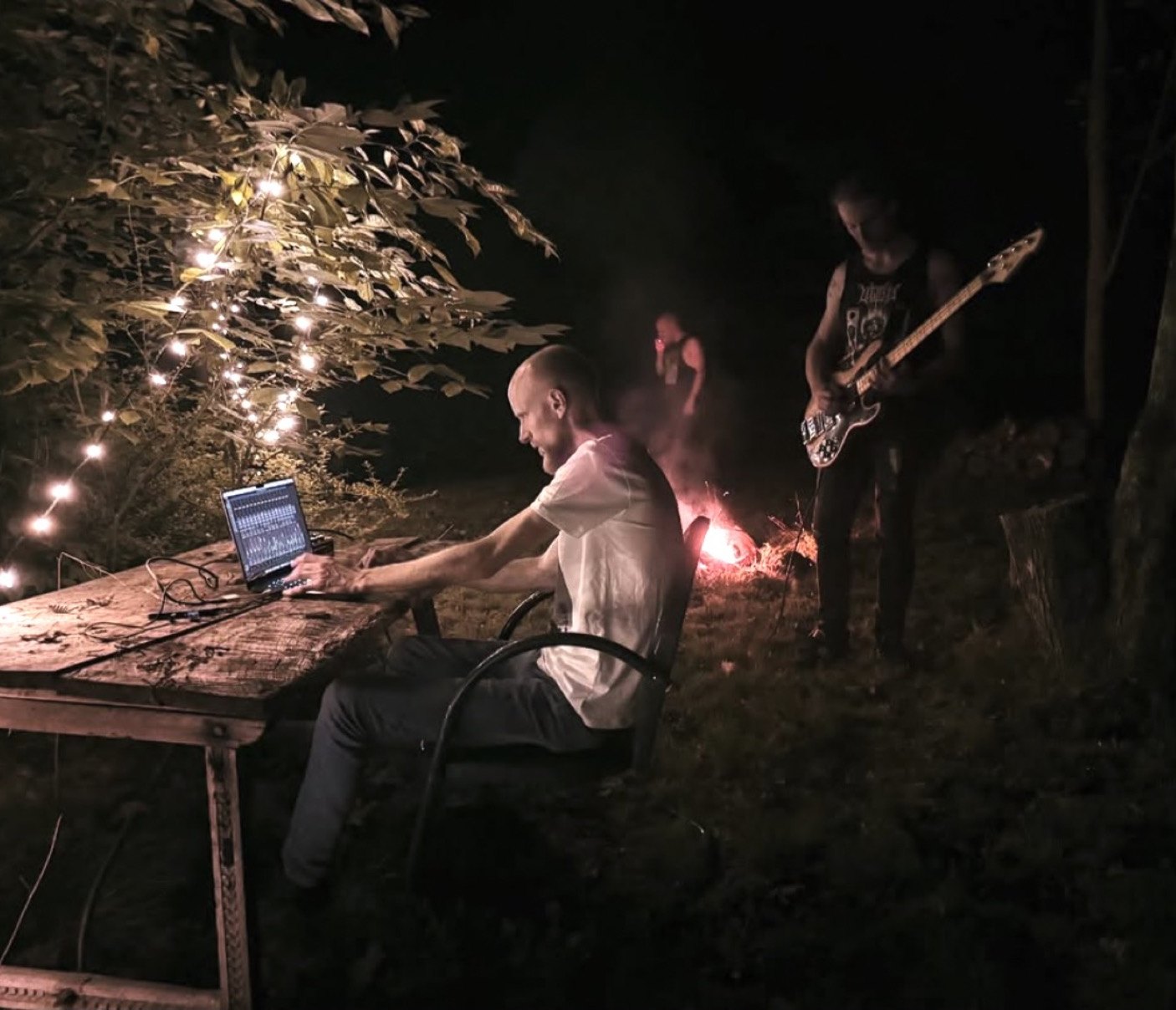
Will: It’s a good question. Definitely just the environment in Prague — particularly for a metal band, you know, it’s a very metal city. After that we lived in New York City for the first 10 years of this band, and people would always ask, “How does living in New York City affect the sound?” And I would always think: for me, not at all. I hated living in New York City. I mean, I liked living in the city, but it was not an inspiring place to be at all. Inspiring in certain ways, but it didn’t create the atmosphere that was great for writing music. Then six years ago I moved upstate, into a smaller city or town, and I have more space, I can light a fire outside and sit in peace. I think that allowed me to be much more creative again.
Living in the city was beneficial: I met Mike, our drummer, and you meet all these other people. But after I lived in that environment for 10 years, just being in a peaceful place away from all the noise was the most beneficial thing for being creative, writing new music, being inspired. I didn’t need to be inspired by other people’s projects so much. I’m just inspired by having my own solitude and my own space. It also helps that my brother lives in the same town and he has a studio.
Q Do you ever find that spending time with people who aren’t really your kind — even nice ones — blurs your creative vision?
Will: I know what you mean. It’s a funny thing, because while I do love my life in this little town, I feel like I’m learning this very slowly. I don’t know why — it makes me feel like I’m not that smart, it’s a very slow learning process.
If we have six months in between shows, I’ll just go back to my normal life. Let’s say I’ll go meet some people in my town, people who aren’t into music or something, and I always think, “What’s wrong? Is it me? Is something wrong with me?” But then you come back out on the road and you meet other people in bands, and it’s an immediate connection. In two seconds you’re like, “Oh yeah, this is why.”
It’s very funny: we see a lot of the same bands at festivals and on tours, and some of them I could consider almost my best friends, extremely close. But then you add up how much time we spent together and it’s maybe 24 hours total. Not that much time, but the time we spend together is so valuable, because we’re often in these adventurous places doing something.
Q Have you ever talked music with people who aren’t into extreme music but listen to Arvo Pärt or contemporary classical? Do you think they could appreciate what you do?
Will: I do, I do. That’s a great question. I do think that. We’re playing metal only, but we love to listen to all of that wide range of music. And I do think if people have “elite” taste in music, why wouldn’t they appreciate at least a little bit of metal? It shouldn’t turn people off so profoundly.
Q Because they can pick out the elements that build a band’s identity.
Will: Yeah. I would say if somebody’s listening to Arvo Pärt or something, they could probably get into black metal. But if somebody’s listening to Coldplay, I’m not sure they could understand it, for example.
Q Well, your mother was classically trained, yeah?
Will: Yeah, she’s a pianist. So we grew up with music in the house, and she can’t appreciate what we do. She just wishes we would play acoustic instruments more (laughs).
Q I read that she’s quite acclaimed — she got a Guggenheim grant.
Will: That was a big thing for us. We didn’t grow up in a house with lots of money or anything — our parents were in the arts. So that was a big deal for her back then. She focused on being our mother; she wasn’t gone, she composed from the house. So we grew up with music in the house, and we were always encouraged. I give our parents a lot of credit. Even though we didn’t have lots of money growing up, if we wanted an instrument, they would always say, “We’ll get the instrument. It’s a good thing.”
Q I’m asking because one thing hooked me in your interviews: you’ve mentioned that you kind of don’t know what you’re doing, but you also kind of do.
Will: Yeah. The way it comes together — to be very loose about it — I write most of the riffs, and my brother turns them into songs. Sometimes our parts are really complicated, and sometimes they’re not; sometimes there’s space. But to do the complicated stuff, it’s hard to do it together, it’s easier for me to do it alone. So I sit at home, and if we were starting a record, I would just hit record and play a few seconds, stop. Just do that for like an hour every day. And then I bring it to Sam, and that’s where we start to make the structure. But we have a couple of ideas before we make the structure: a good place to start, maybe a good middle, maybe a good ending. But it does take us a very long time.
Q Some parts of your songs repeat.
Will: Yeah. So I think if you’re writing songs like that, then your evolution could just be writing better songs, not necessarily changing your entire form. And I think with Confusion Gate, at least, we finally wrote better songs.
That’s the other thing I tell people in bands who want to know, “How did you make this song?” We just tried really hard. We’re very hard on ourselves. I think that’s the main defining factor of Yellow Eyes: we’re very hard on ourselves when we’re writing the music. You’ll see tonight, we’re not technical players, not really at all. Last night there was a band opening for us, super technical, sweep picking, and they said, “Your guitar parts are so crazy.” And I said, “They’re not crazy. My part is easy, my brother’s part is easy, but when they’re together, they sound crazy.” So I think these are all our compositional tricks.
Q When I was invited to interview you, I asked some mutual friends what they would want to ask the band. One of them said, “Not much, really — except why the fuck does your drummer hit so hard?”
Will: I think that’s actually the secret weapon of this band. If you really strip our guitar parts apart, they’re a little flowery sometimes. We’re not drop-tuned, it’s E standard tuning. And I think if we had a drummer who was playing really fast and light, we would be a very different band. I’m not consciously trying to be a progressive writer. We all just like black metal music; we’re not consciously trying to do something crazy different. And having Mike as our drummer — he is the spirit of black metal in a drummer. He understands the force, he understands power, flow, things like this.
Q I heard that Dan Swanö tells his clients that they only need to give him one reference — the perfect metal record they can think of — and he will just replicate it. But the decisions made at the recording stage will still make it sound different. Obviously, after all these years you know how you should sound, but can you imagine a single record that could serve as a reference for Yellow Eyes?
Will: You know, that’s the funny thing — kind of no. Sam’s been mixing us since 2010, our first record. And back then I would say, “Oh, it should sound like this. I love this record — let’s say Ulver, Bergtatt, or something. Could it sound like that?” And he would try it: “No, it doesn’t work.” We tried so many paths, and nothing ever worked. Sam would try and try and try and say, “It doesn’t work. It has to be its own universe.”
Sam: We’re a different band than those other bands, so it just doesn’t always work. To me, the only strategy that’s ever worked is going fishing for a mix — just trying a hundred mixes and waiting until it feels emotionally resonant. It’s the only thing that ever works.
Will: On the last record, Sam had a million versions of this record. He mixed 100 versions of it or something.
Sam: 79.
Will: So there are some versions that are a little bit more hi-fi sounding. And we just realized, for our kind of music, if you want to really fall in love with a record, there’s a sweet spot somewhere in between the lo-fi and the hi-fi that makes you want to listen to it again. It doesn’t make your ears tired, you just want to come back into the world.
Q I can relate to all of that. I always thought that after years of frustration working on a single record, writing the next one would get easier, but it always stays hard.
Will: I think that means you’re doing something right.
Sam: If it’s easy to write and easy to finish, it means it’s going to be boring to listen to. It should be hard.
All of our gear was horrible — still is horrible.
Q I can’t stop myself from doing nerdy guitar talk. Readers always hate questions about amps and guitars in interviews, but could you lift the veil on this: do you have go-to gear or software for your guitar sound?
Will: That’s a good question. No.
Sam: No.
Will: We’ve never really cared about amps or guitars. In fact, most of our records were recorded on two amps we got for free. We never thought about it. I will say, on Confusion Gate, though — for the first time ever, we played some festival in Germany, and they had a nice backline, a really nice ENGL head. So we got a small version of it, and we used that to reamp everything.
Sam: The ENGL Powerball. That was amazing for recording.
Will: So suddenly — we’ve been in the band for so many years, but we feel so late to it — in the reamping we’re like, “Oh my god, if you have a really nice cab and a really nice amp, things sound way better.” We never realized that in 15 years.
Sam: Well, the goal on this record was to — not hi-fi, but make the resolution a little higher. See if we could exit the lo-fi realm and keep the atmosphere, which is a big challenge, because we wanted the drums to be a little more like 70s, tighter and less roomy maybe. And with that, the challenge was how do you level up the guitars, and I realized in doing this that all of our cabs are so bad, all of our gear was horrible — still is horrible. So I was buying some new gear, trying things out.
Will: You got a Mesa Boogie cab. Did you get that before the recording?
Sam: No, that was after.
Will: Oh, God. So we got a nice cab after we recorded. So the next album is going to sound really good.
We are just bursting with the desire to keep saying the thing.
Q I’ve got my favorite fucked-up question. So, have you read David Foster Wallace’s Infinite Jest?
Will: No, I never read Infinite Jest. I know about it, though.
Q So in Infinite Jest there is a character who always feels guilty when he’s having sex, because he believes only a finite number of erections can exist in the world, so when he’s having sex, some peasant in a poor Asian country is deprived of his deserved relief. After reading that, I thought: if only a finite number of people in the world could make music, why should Yellow Eyes exist? What’s your justification for taking that spot from some kid?
Will: It’s an amazing question. I love the question.
Sam: Yeah. It’s a great way of saying the classic “Get off the stage. If you don’t have anything to say, get off the stage.” And all I can say is, we are just bursting with the desire to do something, to keep saying the thing that we’re trying to say. And I think a lot of bands, if you know what that feels like, then you know you have to continue.
Will: I think the best thing that ever could have happened to us is we never got super popular. We never released one record that made things crazy. Certain bands release a record and then suddenly they’re playing huge stages. For us, we were always very slowly, incrementally getting better. And the game really was just between us. We get so much joy out of pushing each other and pushing ourselves to make the best songs we can possibly make. I just feel like a lot of people phone it in these days. A lot of bands know what people want to hear, and they can do that. We cannot do that. It’s not possible for us. It’s been the longest gap between records — proper metal records — for us. It was like five years or something. And we had sat down many times, we wrote almost full albums. And we just know: if it’s not good enough, we’ll just completely stop. We don’t care. We’ll only go forward if it feels like it’s worth pursuing.
Sam: For us, there’s only one motivation. It’s a joke to imagine being motivated by money or fame or anything. To us, it’s the perfect balance of a song and an album, the beauty of it. The attempt to achieve that is enough to continue.
Q Have you ever been motivated to write music just so you could listen to it yourself?
Sam: When we’re writing, I imagine listening to it later, and that helps. But we never get to the point later when we’re listening to it.
Will: Yeah, almost never. Although I will say, when we’re in the writing, recording, mixing — for us that could be six months or longer — in that time I almost listen to nothing else. I’m only listening to the demos, I’m only listening to mixes.
And I like listening to other music, but when we’re in that mode, I only listen to what we’re doing. And it’s funny: up until the moment it’s released, that’s the only thing I listen to, and then the moment it’s released, I almost never listen to it again. Unless we have to relearn a song.
Q So, the last question: if somebody wants to listen to your music for the first time after reading this interview, what would you advise as the perfect listening environment?
Sam: Don’t do it. (laughs)
Will: The thing that makes me feel the most successful as a musician is when we release a record and you see people on Instagram post that they’re listening to it on a long bike ride or a hike or something like that. We met a girl the other night from Azerbaijan, she’s on the national climbing team, and she said she’d listen to it on a climb. If somebody does that, I’d say that’s the highest honor. I’m not saying everybody should go climb a mountain or something, but in a way it’s adventure music.
Sam: It’s a journey.
Will: So even if you just take a walk. Or if you’re some extreme BMX bike rider, you start it at the top of the hill and…
Sam: Listen to it on your way down. Oh, if there are any Megavalanche downhill bike riders out there, tell them to send us the footage, we’ll use it for the music video.
Will: There are GoPro recordings of races in the Alps. They start at the very top, in the snow, and they ride as fast as they can down. And we find those are very good visuals to accompany the music. We’ve tested that sometimes: if you can watch a race like that and listen to one of these songs and you feel exhilarated — the music should feel exhilarating.
Listen to the latest Yellow Eyes record, Confusion Gate, on Bandcamp and other platforms.
More interviews
-
Nekroskop Booking
“Don’t try to follow new trends”: an interview with Sadist
Sadist is a band that has stood the test of time, evolving yet remaining deeply rooted in their progressive, technical death metal origins. Hailing from Italy, they’ve been creating complex and heavy music for over three decades. In this interview, we sit down with the composer and guitarist Tommy Talamanca to explore his thoughts on staying true to the band’s identity in an ever-changing music landscape, his views on modern metal production, and how they balance technology with authenticity. We also discuss their creative process, the challenges of writing new material, and the insights into the current state of the metal scene.

-
Nekroskop Booking
“Learn to be uncomfortable”: an interview with Frail Body
To describe Frail Body, I’d give two answers. The short one: they’re three guys opening black holes with their music. The slightly longer one: Frail Body is a trio hailing from Illinois, delivers a dynamic blend of screamo, post-hardcore, and other extreme genres. As they prepare for their upcoming show with their latest album “Artificial Bouquet,” we sat down with Lowell Shaffer (guitars, vocals) and Nik Kuczynski (bass) to discuss their rapid rise in the burgeoning screamo scene. In our conversation, they shared insights about life on the road, wild tour stories, and their commitment to creating honest music in 2024.

-
Guiding Light CollectiveRUS
«Абсолютно тот же самый советский DIY»: интервью с Supruga
Уже шесть лет самарские угольные хардкорщики Supruga гремят на афишах разных городов и стран. Пожалуй, практически каждый эстет отечественной темной музыки был заинтересован работами «Хаос» и «Никто не в безопасности», или отмечал присутствие столь экстремальной команды на фестивалях и шоукейсах «Боль», «Awaz» и «Moscow Music Week». За ширмой этой хардкор-машины, облюбованной интеллектуальными журналами и подпольными деятелями, стоит коллектив из четырех друзей, особо ревнующих свою музыку к воле случая.
